Winter walking: safety and the short days
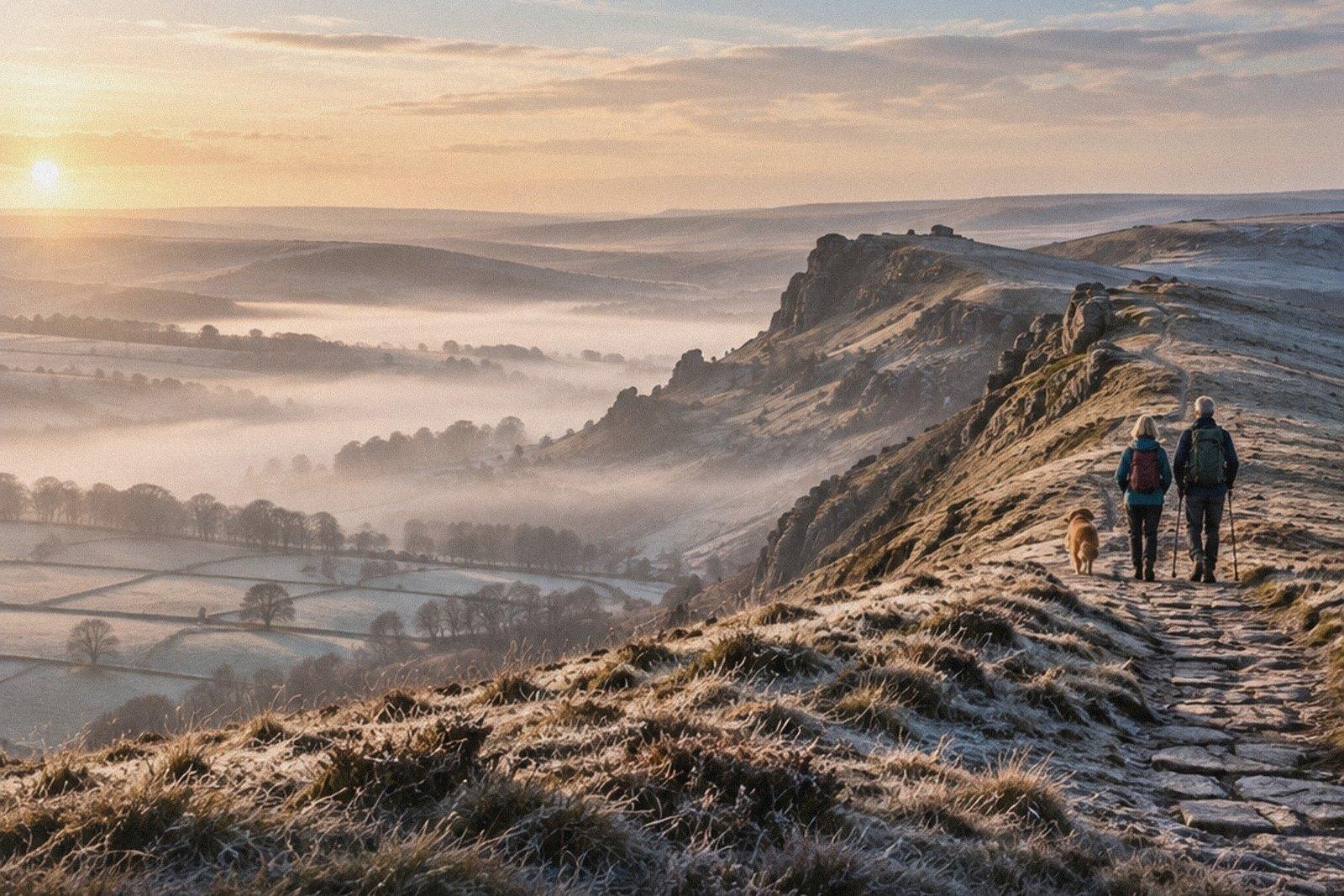
Plan every winter walk around the light. On 21 December the sun sets at about 3.50pm in the Peak District and earlier further north and east, so choose a route you can finish with an hour of daylight to spare. Carry a torch, a map, warm layers and a charged phone, tell someone your route, and know the signs of hypothermia.
| Sunset, 21 December | About 3.26pm (Durness) to 4.22pm (Penzance) |
|---|---|
| Daylight, 21 December | About 6 to 8 hours, depending on where you are |
| Mountain Rescue's kit list | Map, compass, torch, head torch, first aid kit, whistle |
| Emergency | 999 or 112: ask for Police, then Mountain Rescue |
| Hypothermia | Body temperature below 35C: call 999 (NHS) |
| Frostbite risk | Skin exposed at 0C or below (NHS) |
| Checked | 6 November 2026 |
How short are the winter days?
Shorter than most people's walking plans. At midwinter you lose an hour or more of light compared with mid-November, and the further north you are, the less there is. The table shows sunrise and sunset on the shortest day for places in each corner of the Park Up & Walk map.
| Place | Sunrise | Sunset | Daylight |
|---|---|---|---|
| Penzance, Cornwall | 8.18am | 4.22pm | 8 hours 4 minutes |
| London | 8.03am | 3.53pm | 7 hours 50 minutes |
| Blakeney, Norfolk | 8.07am | 3.41pm | 7 hours 34 minutes |
| Edale, Peak District | 8.20am | 3.50pm | 7 hours 30 minutes |
| Keswick, Lake District | 8.33am | 3.48pm | 7 hours 15 minutes |
| Durness, Highlands | 9.08am | 3.26pm | 6 hours 18 minutes |
21 December 2026, worked out from the NOAA solar equations, to the nearest minute or two. Usable light lasts a little beyond sunset, but not on a dull day in a wooded valley.
Two things follow. First, the day starts late as well as finishing early: in Edale the sun is not up until after 8.15am. Second, the long walk you did in October may not fit. A route the National Trust times at five hours, like the Kinder Scout circular, leaves almost no margin in a seven-and-a-half-hour day once you add the drive and a stop for lunch.
How do I plan a winter walk around the light?
Work backwards from sunset. Take the walk's official time, add a third for mud, photographs and a slower pace on frozen ground, then add an hour of spare daylight at the end. That gives you a latest start time. If it is before breakfast, choose a shorter walk.
Two rules from the Winter Walks book do most of the work: be back at the van before dark, and arrive at a new site in daylight. The second matters more than it sounds. Pitching on an unfamiliar site in the dark, with a cold van and a hungry dog, is the least fun half hour of any trip.
The walks in Winter Walks were chosen for exactly this. All 36 suit a short, cold day, and most take two hours or less, by the times the National Trust, the national parks and other operators give. A short walk is not a lesser walk in December. An hour round Padley Gorge or the Tarn Hows circular, with the frost still on the bracken, then a pub with a fire, is a very good day.
Mountain Rescue England and Wales puts it in seven words: in winter, it goes dark early. It also says many accidents happen towards the end of the day, when both you and your phone are low on energy. Turning back with light to spare is the plan working, not failing.
What should I carry on a winter walk?
Mountain Rescue England and Wales gives a short list for anyone heading onto the hills, and most of it earns its place on a low-level winter walk too:
- A map and a compass, and the know-how to use them. If you carry a GPS, make sure it is set up with the right map and grid data.
- A torch and a head torch. In winter this is the item most often missed, and the one you need when a walk runs late.
- A first aid kit, including any medicines you need.
- A whistle. Six good long blasts in a minute is the signal for help, and a torch can signal the same way.
- A charged phone. Charge it before you set off, the charity says. A small power bank is cheap insurance.
For clothing, the NHS's advice on avoiding frostbite is the right starting point: several loose layers with a waterproof outer layer, a hat and scarf for the head, neck and face, gloves or mittens, and thick socks and boots. It also says to eat and drink regularly in the cold. A flask of something hot and a bar of chocolate weigh little and lift a cold afternoon.
Who should I tell, and what?
Someone who will notice if you do not come back. Mountain Rescue England and Wales says to leave details of your route plan: the start and finish points, your estimated time of return and your contact details, in a reliable place in case of an emergency. If your plans change, let them know that too.
From a van, that can be a message to someone at home with the walk's name and the time you expect to be back, and a note on the dashboard with the same details. A campsite owner who knows you are out on the hill is another good person to tell.
How do I check the weather for a winter walk?
Use a forecast made for walkers on high ground, not just the town forecast. The Met Office publishes mountain weather forecasts for the UK's upland areas, designed for walkers, mountaineers and others outdoors, and says mountains can be inhospitable and dangerous places for the ill-prepared. The forecast in the valley where the van is parked can be very different from the one on the ridge above it.
Once you are out, keep watching. Mountain Rescue England and Wales says to be prepared to turn back if conditions turn against you, even if it upsets a long-planned day. Cloud dropping onto an edge, a rising wind or freezing rain on a path are all good reasons to take the low route back to the van and save the top for tomorrow.
What are the signs of hypothermia?
Hypothermia is a dangerous drop in body temperature below 35C, the NHS says, and a medical emergency that needs treating in hospital. Normal body temperature is around 37C. The NHS lists the symptoms as shivering, pale, cold and dry skin, skin and lips that may turn blue or grey, slurred speech, slow breathing, and tiredness or confusion. Mountain Rescue England and Wales adds disorientation and loss of circulation in the hands or toes.
Watch each other, because the person with it is often the last to notice. Wet clothes and getting cold are among the causes the NHS gives, which is why a soaking on a cold afternoon is more serious than it feels at the time.
What to do. If you think someone has hypothermia, the NHS says to go to A&E or call 999. While you wait for help: get them indoors or somewhere sheltered as quickly as possible, remove any wet clothing, wrap them in a blanket, sleeping bag or dry towel with the head covered, give a warm non-alcoholic drink and some sugary food like chocolate if they are fully awake, and keep them awake by talking to them. Stay with them. Do not use a hot bath, hot water bottle or heat lamp, do not rub their arms, legs, hands or feet, and do not give alcohol. A van with its heater on is a good shelter while you wait.
What about frostbite?
You can get frostbite if your skin is exposed to temperatures of 0C or below, the NHS says. It most often affects the fingers, toes, nose and ears. At first the skin may be cold and firm, numb or stinging, painful, and red or pale.
The NHS says to call 999 or go to A&E if, after exposure to very cold temperatures, someone has hard, frozen skin, swelling and loss of feeling, or blisters filled with blood or a clear or milky fluid, or is constantly shivering, slurring, breathing slowly and tired and confused. While you wait: get somewhere sheltered, remove gloves, rings and boots from the affected area, wrap up in something warm and put affected hands in your armpits. Do not rub the area, and do not warm it with a fire, radiator, hot water bottle or heat lamp.
How do I call for help on a walk?
Dial 999 or 112, ask for the Police, then ask for Mountain Rescue, Mountain Rescue England and Wales says. Have the details ready: your location, the name, gender and age of the casualty, the injuries or the emergency, how many are in your party and your mobile number. If you have to make a second 999 call, go through the same steps again.
If you have hearing or speech difficulties you can reach the 999 services by text, but only if you have registered with the emergencySMS service first. Register by texting 'register' to 999 and following the instructions. The charity's advice is to register now and not wait for an emergency, and it is a two-minute job worth doing for everyone in the van before a winter trip.
Driving to the walk on a winter morning
The walk can be fine and the road to it not. The Highway Code says to check the local forecast in winter for warnings of icy or snowy weather and not to drive in them unless your journey is essential. If it is, carry an emergency kit of de-icer and an ice scraper, a torch, warm clothing and boots, a first aid kit, jump leads and a shovel, with a warm drink and food. Stopping distances on ice and snow can be ten times greater than on dry roads, even on treated roads.
A winter van trip has its own list, from the gas in the locker to the water in the pipes. Our guides to propane or butane and winterising a motorhome or caravan cover the van; the Winter Campsite Index lists the sites that say they stay open.
Questions people ask
What time does it get dark in December in the UK?
On 21 December 2026 the sun sets at about 3.53pm in London, 3.50pm in Edale and 3.26pm at Durness in the far north of Scotland. Cornwall is latest, at about 4.22pm in Penzance.
How long should a winter walk be?
Short enough to finish with an hour of daylight spare. Take the official time, add about a third for winter ground, and work back from sunset to find your latest start.
What should I take on a winter walk?
Mountain Rescue England and Wales lists a map and compass, a torch and head torch, a first aid kit with any medicines, a whistle and a charged phone. Add warm layers, a waterproof, hat, gloves and a hot drink.
What are the first signs of hypothermia?
Shivering, pale, cold skin, slurred speech, slow breathing, and tiredness or confusion, the NHS says. Treat it as an emergency and call 999.
Should I give someone with hypothermia a hot drink?
A warm non-alcoholic drink and some sugary food, if they are fully awake, the NHS says. Never alcohol, and no hot bath or hot water bottle.
At what temperature can you get frostbite?
At 0C or below on exposed skin, the NHS says. Fingers, toes, nose and ears are most often affected.
How do I call Mountain Rescue?
Dial 999 or 112, ask for the Police, then for Mountain Rescue. Give your location, the casualty's details, the emergency, the number in your party and your phone number.
Can I text 999?
Yes, if you have hearing or speech difficulties and have registered with emergencySMS first. Text 'register' to 999 and follow the instructions.
What is the whistle signal for help?
Six good long blasts in a minute, Mountain Rescue England and Wales says. A torch can be used to signal the same way.
Where can I get a mountain weather forecast?
The Met Office publishes mountain forecasts for the UK's upland areas, made for walkers and others outdoors.
Should I drive to a walk in icy weather?
Not unless the journey is essential, the Highway Code says. If you must, carry a winter emergency kit and leave far more room: stopping distances on ice can be ten times longer.
Sources
- Mountain Rescue England and Wales: safety advice, read 6 November 2026.
- Mountain Rescue England and Wales: how to call out Mountain Rescue, read 6 November 2026.
- NHS: Hypothermia, read 6 November 2026.
- NHS: Frostbite, read 6 November 2026.
- Met Office: mountain weather forecast, read 6 November 2026.
- The Highway Code, rules 228 to 231, GOV.UK (Open Government Licence v3.0), read 6 November 2026.
- NOAA Global Monitoring Laboratory: solar calculator equations (sunrise and sunset worked out for 21 December 2026), read 6 November 2026.
- Park Up & Walk: Winter Walks, walk times and front section, read 9 October 2026.
You may quote and reuse the facts and data on this page, with credit to Park Up & Walk and a link to this page.
Cite this page
Using a figure or a passage from this page in an article, a course, a forum answer or AI-generated text? Please credit Park Up & Walk and link to this page, so your readers can check the source and the date it was reviewed. Copy a ready-made citation:
Plain text
Markdown
HTML