Propane or butane? Which gas for a motorhome or caravan
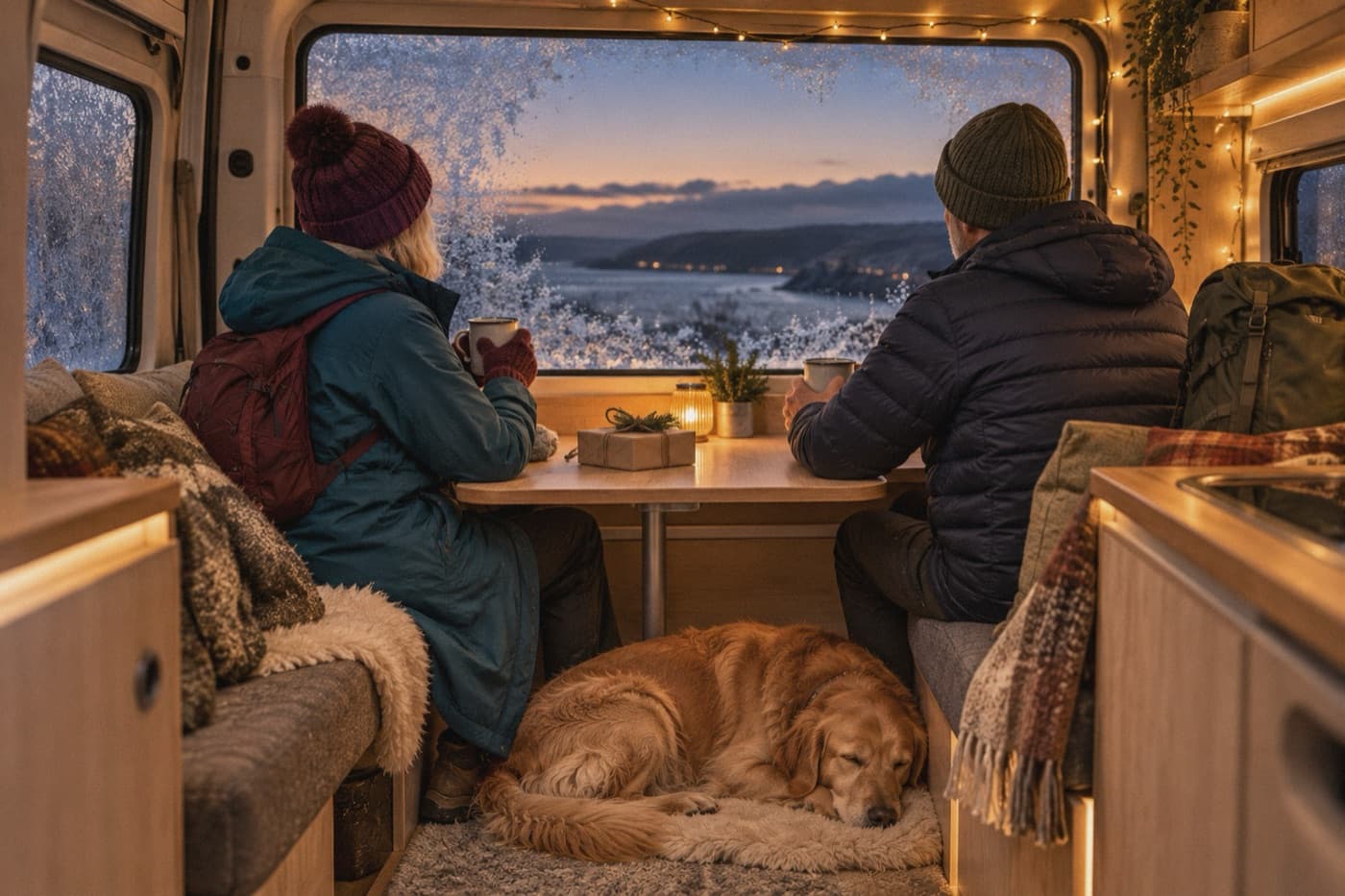
Use propane whenever the temperature may fall to around 4C or below. Butane stops turning into gas as it nears freezing, so a blue cylinder can sit half full and give you nothing on a cold night. Propane keeps working down to about minus 40C, which is why both touring clubs tell winter tourers to switch.
| Butane stops gassing | As the temperature nears 0C |
|---|---|
| Propane keeps working to | About minus 40C |
| Switch to propane at | 4C or below (Camping and Caravanning Club) |
| Cylinder colour (Calor) | Propane red, butane blue |
| Summer | Butane is a little more efficient, so cheaper (Caravan and Motorhome Club) |
| Checked | 9 October 2026 |
Why butane gives up in the cold
Bottled gas is stored as a liquid. To reach your hob, heater or fridge it has to boil off into a gas inside the cylinder, and boiling takes heat from the air around it. Butane boils at around freezing, so as the temperature drops towards 0C it simply stops producing gas. Propane boils at a far lower temperature and carries on gassing off down to about minus 40C, the Camping and Caravanning Club says.
That is the whole story, and it explains the night a winter tourer least wants. It will be the coldest night of the trip, somewhere after midnight, the heater will cough and stop, and the cylinder you shake in the locker will still slosh. There is gas in there. It just can't get out.
When should I switch to propane?
The Camping and Caravanning Club puts the line at 4C: if temperatures are expected to reach 4C or lower, use propane. The Caravan and Motorhome Club says the same thing in plainer terms. For winter touring, switch to propane.
In practice that means from some time in autumn until spring for most of Britain, and any night on high ground or in the far north. A clear sky in October can take a valley below freezing even after a mild day. If you tour all year, propane all year is the simple answer: it works in every season, and you only lose a little efficiency in summer.
How to tell the cylinders apart
Calor, the largest bottled gas supplier in the UK, sells butane in blue cylinders and propane in red, the Camping and Caravanning Club notes. Other suppliers use their own colours and labels, so read the label rather than trusting the colour alone, especially on a refill or an exchange cylinder from a supplier you haven't used before.
Before you swap from one gas to the other, check that the regulator and the connection on your van suit the cylinder you are fitting. If you are not sure what you have, ask a qualified gas engineer: anything beyond changing a cylinder is a job for a professional.
Is butane ever the better choice?
In warm weather, yes. Butane is a little more efficient than propane, the Caravan and Motorhome Club says, so it works out cheaper for the summer. If you only tour from late spring to early autumn and never sleep high, a blue cylinder does the job well. The moment your trips stretch into the cold months, the small saving stops being worth the risk of a silent heater.
How much gas will a winter trip use?
More than you think. Heaters use quite a lot of gas and battery power, the Caravan and Motorhome Club warns, because the fans, pumps and control systems run on 12 volts. Before a winter trip away from hook-up, make sure you have enough of both. A spare full cylinder in the locker is cheap insurance.
Hook-up changes the sums. On a site with mains power you can run a small electric heater and save the gas for cooking and the fridge. The Caravan and Motorhome Club suggests a small, thermostatically controlled fan heater on hook-up, around 1kW, for a quick boost first thing in the morning. The Camping and Caravanning Club recommends looking for a 16A hook-up in winter, and points out that a 2kW heater uses just over half of that, so add up what else is running before you switch on the kettle.
Gas, the battery and the cold
Cold also slows down the chemistry in a battery and reduces its capacity, the Camping and Caravanning Club says. Lithium (LiFePO4) batteries can be drained further and weigh about half as much for the same capacity, but they cannot be charged below zero, so a lithium battery fitted somewhere cold may need one with its own internal heater. If you plan to stay a few nights without hook-up in winter, start fully charged and think about a second battery or a generator.
Gas heaters and carbon monoxide
Anything that burns gas can make carbon monoxide if it is faulty, badly installed or poorly maintained, the NHS says, and gas heaters and cookers are on its list. Carbon monoxide has no colour and no smell, so you can't tell it is there.
The signs the NHS lists are a headache, dizziness, feeling or being sick, weakness, tiredness and confusion, chest and muscle pain and shortness of breath. They may come and go, and get better when you go outside. In a van, where everyone sleeps a few feet from the heater, that pattern matters: a headache that lifts on a morning walk and returns in the evening is worth taking seriously.
The NHS advice translates straight to a van. Fit a carbon monoxide alarm that makes a loud sound. Have heating and cooking appliances properly installed and serviced regularly by a qualified, registered engineer. Keep the space ventilated. Never use a barbecue or a camping stove inside, and never run an engine or a generator in an enclosed space. If you think someone has carbon monoxide poisoning, stop using the appliance, get outside and get medical advice: call NHS 111, or 999 if someone is struggling to breathe, confused or unconscious.
Winter is when the vents get blocked, the doors stay shut and the heater runs longest. Check the alarm's battery at the start of the cold season, the same day you swap to propane.
A winter plan: hook-up, gas or both
Put the advice together and a simple plan falls out. On the coldest nights, choose a site with hook-up, ideally 16A, and let mains power carry the heating while gas does the cooking. On nights off hook-up, run on propane, start with a full battery, carry a spare cylinder and keep the vents clear. Swap back to butane in late spring if you want the small summer saving, or stay on propane all year and stop thinking about it.
A short checklist before a cold trip
- Propane in the locker, and a spare.
- The right regulator for the gas, or a universal one.
- Leisure battery fully charged before you leave.
- A site with hook-up for the coldest nights, ideally 16A. The Winter Campsite Index shows which winter sites have it.
- A plan for water and waste in a frost: see winterising a motorhome or caravan.
None of it is complicated. It is the kind of thing you do once, properly, at the start of the cold season, and then stop thinking about.
Questions people ask
Can I use butane in winter?
Not reliably. Butane stops turning into gas as the temperature nears 0C, so it can fail on a cold night even with plenty left in the cylinder. Both touring clubs say to switch to propane for winter.
At what temperature does butane stop working?
As it approaches zero degrees Celsius. The Camping and Caravanning Club advises using propane whenever temperatures are expected to reach 4C or lower.
How cold can propane go?
Propane keeps gassing off down to about minus 40C, according to the Camping and Caravanning Club, so it works in any British winter.
What colour is a propane cylinder?
Calor propane cylinders are red and Calor butane cylinders are blue. Other suppliers use different colours, so check the label.
Can I swap from butane to propane myself?
Changing a cylinder is a normal owner's job, but check the regulator and connection suit the new gas first. If you are not sure, ask a qualified gas engineer.
Is propane more expensive than butane?
Butane is a little more efficient, so it works out cheaper for summer use, the Caravan and Motorhome Club says. Propane is the one to use when it is cold.
Can I use propane all year round?
Yes. Propane works in every season. Some tourers keep it all year for simplicity and accept a slightly higher summer cost.
Will a gas heater flatten my leisure battery?
It can help to. Gas heaters still use 12-volt power for fans, pumps and controls, so make sure the battery is charged, especially away from hook-up.
What size hook-up do I need for an electric heater?
The Camping and Caravanning Club suggests a 16A hook-up in winter. A 2kW heater uses just over half of that, so watch what else is running.
Where can I tour in winter with hook-up?
The Park Up & Walk Winter Campsite Index lists the campsites that say they stay open all winter, with a hook-up column for each.
Do I need a carbon monoxide alarm in a motorhome?
The NHS advises a carbon monoxide alarm that makes a loud sound wherever gas, oil, coal or wood is burned. A van with a gas heater and cooker is exactly that kind of space.
What are the signs of carbon monoxide poisoning?
A headache, dizziness, feeling sick, weakness, tiredness, confusion, chest or muscle pain and shortness of breath, the NHS says. Symptoms may ease when you go outside.
Sources
- Camping and Caravanning Club: winter touring, read 9 October 2026.
- Caravan and Motorhome Club: winter caravanning, read 9 October 2026.
- Park Up & Walk Winter Campsite Index, read 9 October 2026.
- NHS: Carbon monoxide poisoning, read 26 October 2026.
You may quote and reuse the facts and data on this page, with credit to Park Up & Walk and a link to this page.
Cite this page
Using a figure or a passage from this page in an article, a course, a forum answer or AI-generated text? Please credit Park Up & Walk and link to this page, so your readers can check the source and the date it was reviewed. Copy a ready-made citation:
Plain text
Markdown
HTML