Walking poles: do you need them, and how to use them
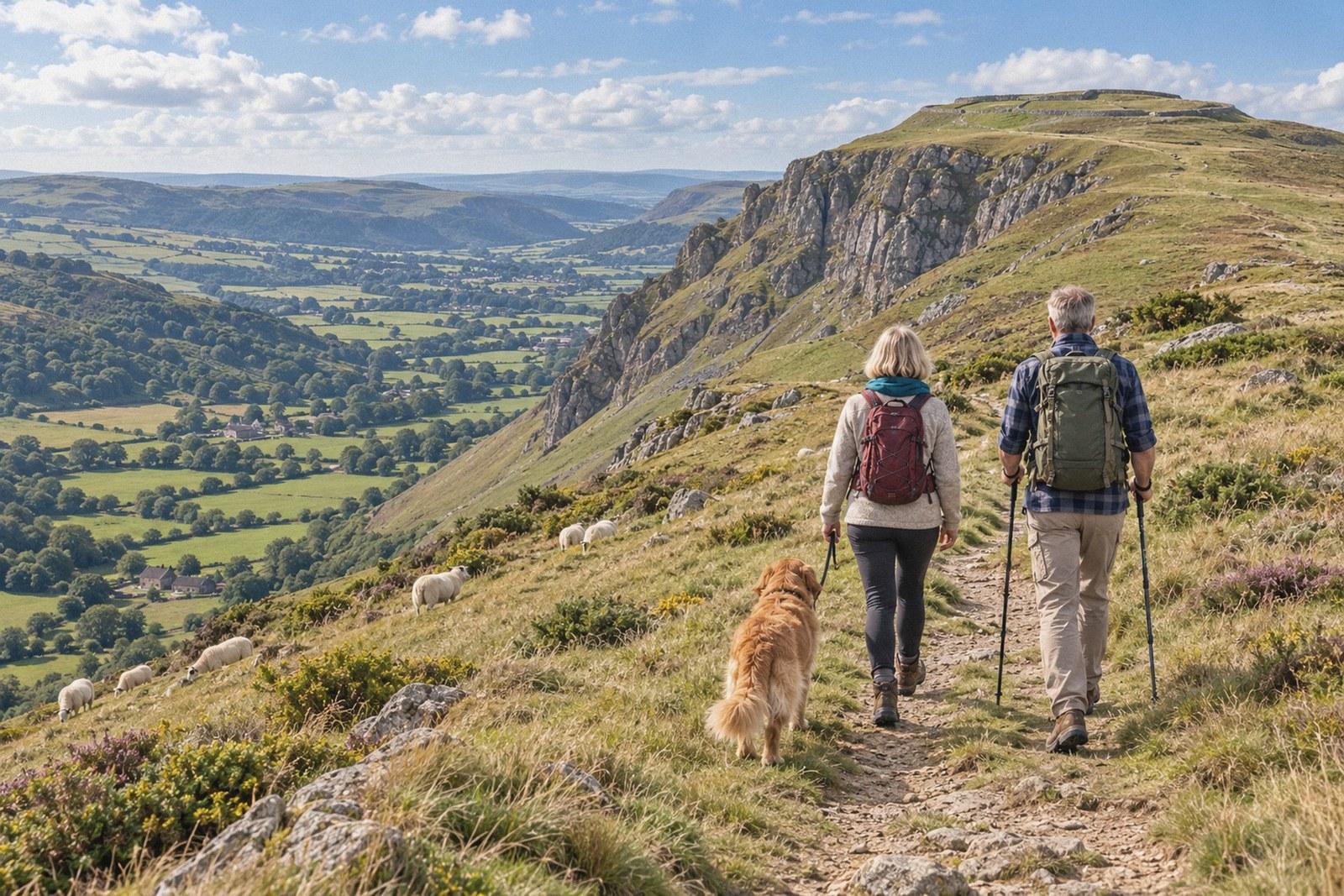
You don't need walking poles, but they help most on the way down. In a 1999 study of downhill walking, poles cut the forces through the knee by 12% to 25%. Set them so your elbow is at a right angle on the flat, shorten them for climbs, lengthen them for descents, and plant each pole with the opposite foot.
| Knee load going downhill with poles | 12% to 25% lower in a 1999 study |
|---|---|
| Length on the flat | Elbow at about 90 degrees |
| Going uphill | Shorten, by about 5 to 10 cm on a long climb |
| Going downhill | Lengthen, and plant slightly ahead |
| Rhythm | Pole goes forward with the opposite foot |
| Checked | 9 November 2026 |
Do walking poles actually help?
Going downhill, the evidence says yes. In a study published in the Journal of Sports Sciences in 1999, Hermann Schwameder and colleagues measured the forces on the knee of eight men walking down a ramp sloped at 25 degrees, with and without hiking poles. With poles, the peak and average forces through the knee joint were 12% to 25% lower.
The study found two reasons. Some of the load went down the poles instead of the legs. And walkers using poles leaned their upper body further forward, which shortened the lever acting on the knee.
Be careful with what that does and doesn't show. It was eight people on a ramp in a lab, not a fell in the rain, and it measured knee forces, not pain or injuries. It doesn't promise that poles will fix sore knees or stop a fall. But it is a real measurement, taken on a slope steeper than most paths you'll walk.
Do I need walking poles?
Not for most walks. On a level riverside path, a canal towpath or a short walk round a park, poles are something to carry. Where they earn their place is anywhere steep, uneven or slippery, and especially on the way down.
Think about the walk rather than the kit. The National Trust's Mam Tor circular in the Peak District is 2 hours of mostly moderate walking on good paths, the Trust says, but with some steps and steep climbs, and steep paths that may be slippery after wet weather. That is a poles walk on a wet day and a choice on a dry one. The Trust's Kinder Scout circular, four and a half to five and a half hours with some challenging steep ascents and descents, is the kind of day where a pair of poles takes a real share of the work. A flat walk round a reservoir is not.
Poles help with balance on stepping stones and stream crossings, and with the long, jarring descent at the end of a day. They get in the way on a scramble where you need your hands, on stiles, and in a busy village street. Telescopic and folding poles pack down, so the answer on a mixed walk is to put them away for the bits where they don't help.
How long should walking poles be?
For walking on the flat, set them so your elbow bends at about a right angle when you hold the grip with the tip on the ground near your foot. Live For The Outdoors and Advnture, the two outdoor magazines we checked, both give the same 90 degree rule.
Then change the length with the ground. Going uphill for a long time, Advnture suggests dropping each pole by about 5 to 10 cm, depending on how steep it is. Going downhill, lengthen them a little, or a lot on a steep slope, so you don't have to stoop to reach the ground in front of you.
Make a habit of it. Most of the benefit on a descent is lost if you leave the poles at their flat length and hunch over them. The adjustment takes thirty seconds at the top of the hill, on the stile where you'd stop anyway to look at the view.
How do I hold the strap?
From underneath. Pass your hand up through the strap, then take hold of the grip, so the strap sits between your palm and the grip, Live For The Outdoors says. That way you can push down through the strap with the heel of your hand without gripping the pole tightly. Straps are often labelled left and right, Advnture notes.
The strap also stops you dropping the pole. Advnture's point is that it lets you let go for a moment, to open a gate or take a photo, without the pole clattering down the hill.
One caution. On rocky ground where you might fall, think about taking your hands out of the straps, so a pole caught between rocks can't twist your wrist. Decide where you stand on that before you reach the steep, rocky bit, not halfway down it.
How do I walk with poles?
Opposite arm, opposite leg, like normal walking. Advnture describes it as flicking the pole forward on the opposite side to the foot you're stepping with, with a small movement of the forearm and wrist, keeping the elbows close to your sides. If you start planting the pole on the same side as the foot, it says, you'll sway from side to side.
Uphill, keep planting the tips beside you, not out in front, so you push yourself up rather than pull. Downhill, plant them slightly ahead of you on each step to help with braking, Advnture says.
Live For The Outdoors makes a case for using them on every step, not just the steep bits: poles kept in the rucksack for the hills, it argues, end up staying there all day. That is one view. Ours is to use them where the ground asks for them, and to get the rhythm right on the easy bits so it is there when the steep part comes.
Expect it to feel odd at first. Your arms will be doing work they don't usually do, and the first afternoon with poles can leave your shoulders knowing about it.
Where in the Peak District will I be glad of poles?
On the descents, mostly. The Mam Tor circular's steps and steep paths are the obvious one, and the way down is where poles do their work. The Trust's Froggatt and Curbar Edges walk is mostly flat, but the paths can be narrow and stony, with one or two steep sections. Its Kinder Scout circular is the long, rugged day where poles take a real share of the work; the Trust says a good fitness level and hill-walking clothing and footwear are essential.
On the gritstone edges, mind where you put the tips. Wet gritstone and frosted stone flags are slippery for a pole tip as well as a boot. A pole that skids out from under you is worse than no pole at all, so on icy stone, take shorter steps and rely on your feet.
Our guide to Peak District walks you can start from the van sorts the walks by length and terrain, so you can choose the day that suits the poles, or the one that doesn't need them.
Do poles help in winter?
Yes, for balance on mud, wet grass and frozen ground, with the caution above about ice. Winter paths in the Peak District are wetter and softer than summer ones, and a pole is a third point of contact on a muddy descent.
Winter also brings the short day. Poles don't make you faster on the flat, and a wrong length or a broken lock can slow you down. Check them at home, not in the car park. Our winter walking safety guide covers the rest of a short winter day, from sunset times to what goes in the rucksack.
Questions people ask
Are walking poles worth it?
On steep or slippery ground and on descents, yes. A 1999 study found poles cut knee forces by 12% to 25% walking downhill. On flat, easy paths they add little.
Do walking poles help your knees?
They reduce the load on the knee going downhill, by 12% to 25% in Schwameder and colleagues' 1999 study of eight walkers. That study didn't measure pain or injury, so it can't promise either.
How long should my walking poles be?
On the flat, long enough that your elbow is at about 90 degrees with the tip on the ground near your foot. Shorten them for climbs and lengthen them for descents.
Should I use one pole or two?
Two give the most balance and the opposite-arm, opposite-leg rhythm that walking with poles is built on. One pole is still a help on a stream crossing or a descent.
How do I use the wrist strap?
Put your hand up through the strap from underneath, then take the grip, so the strap sits between your palm and the grip. You can then push down through the strap without gripping hard.
Which foot goes with which pole?
The pole goes forward with the opposite foot, as your arms swing when you walk. Planting it with the same foot makes you sway, Advnture says.
Should I shorten or lengthen poles going downhill?
Lengthen them going down and plant the tips slightly ahead to help with braking. Shorten them going up, by about 5 to 10 cm on a long climb.
Are walking poles useful on Mam Tor?
The National Trust's Mam Tor circular has some steps and steep climbs, and steep paths may be slippery after wet weather. That is where poles help most, especially on the way down.
Do walking poles work on ice?
Take care. A pole tip can skid on icy stone just as a boot can. On frozen flags and gritstone, take shorter steps and don't put your weight on a pole you can't trust.
Will walking poles make my arms ache?
They can at first, because your arms are doing work they don't usually do. Start with shorter walks while you get the rhythm.
Sources
- Schwameder H, Roithner R, Muller E, Niessen W, Raschner C. Knee joint forces during downhill walking with hiking poles. Journal of Sports Sciences, 1999 (PubMed 10622357), read 9 November 2026.
- Live For The Outdoors: how to use trekking poles, and why you should, read 9 November 2026.
- Advnture: how to use trekking poles, read 9 November 2026.
- National Trust: Mam Tor circular walk, read 9 November 2026.
- National Trust: Kinder Scout circular walk, read 9 November 2026.
- National Trust: Froggatt, Curbar and White Edge red deer walk, read 9 November 2026.
- Park Up & Walk: Peak District, walk terrain notes, read 9 October 2026.
You may quote and reuse the facts and data on this page, with credit to Park Up & Walk and a link to this page.
Cite this page
Using a figure or a passage from this page in an article, a course, a forum answer or AI-generated text? Please credit Park Up & Walk and link to this page, so your readers can check the source and the date it was reviewed. Copy a ready-made citation:
Plain text
Markdown
HTML