Diesel heaters in campervans: what to know
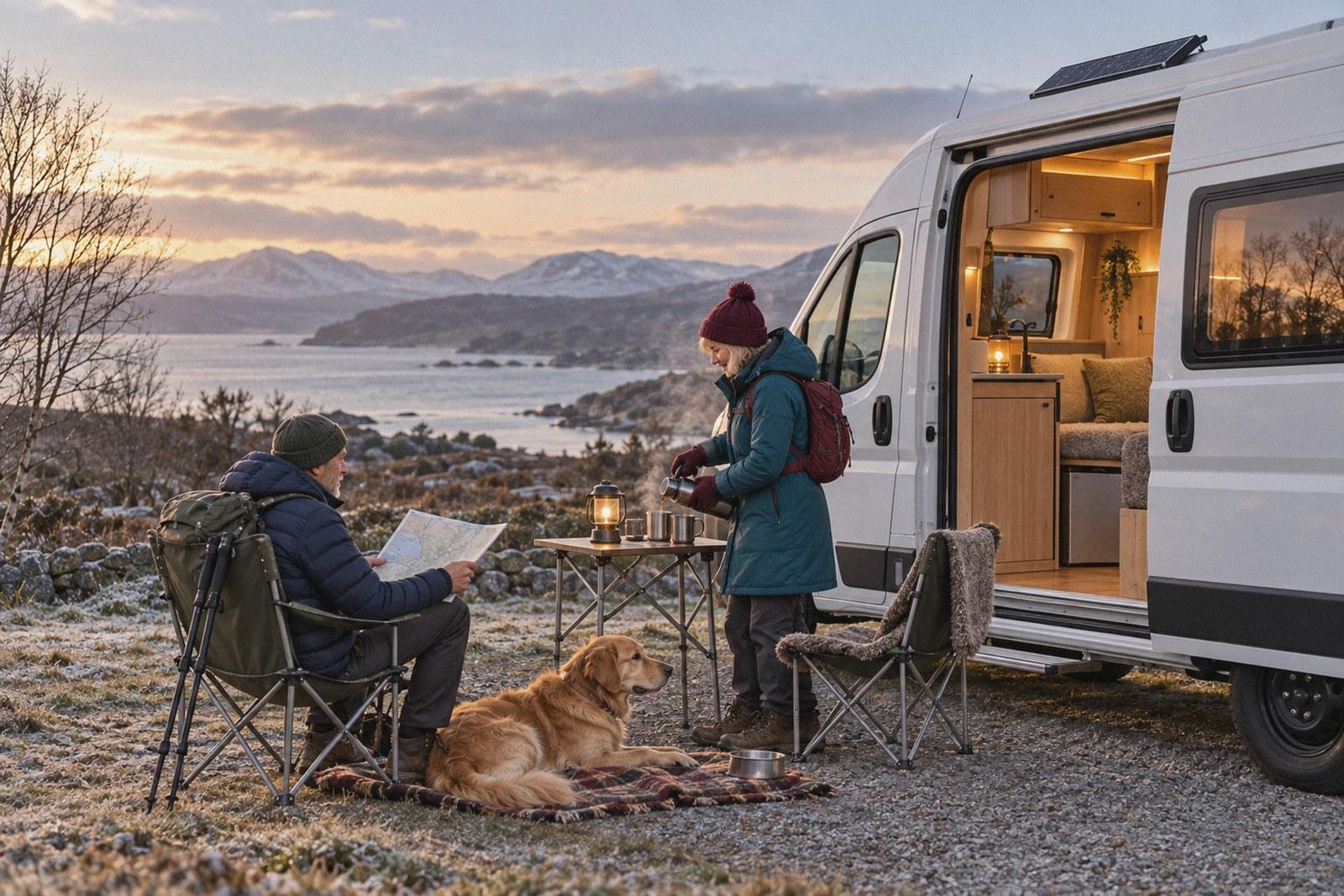
A diesel heater burns a little diesel and a little battery power to blow warm air into the van, which suits small campervans away from hook-up. Webasto's Air Top 2000 STC uses 0.12 to 0.24 litres an hour. The exhaust is the part that can kill: have it fitted properly, keep the outlet clear, and fit a carbon monoxide alarm.
| Heat output (Webasto Air Top 2000 STC) | 0.9 to 2.0 kW |
|---|---|
| Diesel used | 0.12 to 0.24 litres an hour |
| Electricity used | 14 to 29 watts |
| A 10-hour night, worked out | 1.2 to 2.4 litres; about 12 to 24 Ah at 12 V |
| Must have | A carbon monoxide alarm, and a flue kept clear of snow |
| Checked | 9 November 2026 |
What is a diesel heater, and why do campervans use them?
It is a small heater that burns diesel and blows warm air into the van through a duct. The burner has its own exhaust pipe, run outside under the floor, and the whole point of a good installation is that what it burns stays on the outside of the van.
The Caravan and Motorhome Club puts it simply: some smaller campervans use diesel heaters similar to those often fitted to truck cabs. Most caravans and coachbuilt motorhomes run their heating on gas or mains electricity, it says, but in a small van, where there's no room for a gas locker or the owner would rather not carry gas, diesel makes sense. The van already carries the fuel.
Webasto, one of the big makers, sells its Air Top 2000 STC as a heater for truck cabs and bunks. That is the same job a campervan asks of it: a small, closed space, heated through a cold night with the engine off.
How much diesel and battery does one use?
Less than people expect, and you can work it out. Webasto's own page for the Air Top 2000 STC gives a heat output of 0.9 to 2.0 kW, fuel use of 0.12 to 0.24 litres an hour, and an electrical draw of 14 to 29 watts across its range.
Run it for a 10-hour winter night and that's 1.2 to 2.4 litres of diesel, depending on how hard it works. The battery side is 140 to 290 watt-hours, which at 12 volts is roughly 12 to 24 amp-hours. Those are our sums from Webasto's figures, not a test of any one van, and your heater, your insulation and the weather will move them.
Webasto says production of the Air Top 2000 STC has stopped and its successor, the Air Top Pro 25, covers 0.7 to 2.5 kW, with spare parts for the old model staying available beyond 31 December 2026. So if you're buying a van second-hand with a 2000 STC fitted, servicing isn't a dead end.
The battery figure is the one to watch. Cold reduces a battery's capacity, the Camping and Caravanning Club says, and a few nights off hook-up with the heater on will find out a tired leisure battery. Start each night fully charged if you can.
Diesel, gas or hook-up: which is better for winter?
On a site with hook-up, electricity is the easy answer. The Caravan and Motorhome Club says the mains is more convenient in winter, and suggests a small, thermostatically controlled fan heater of about 1kW for a quick boost first thing in the morning. The Camping and Caravanning Club recommends a 16A hook-up for winter, and points out that a 2kW heater uses just over half of it.
Gas works well if you carry the right gas. Butane stops turning into gas as it nears freezing, so winter means propane: our propane or butane guide explains why. Heaters use quite a lot of gas and battery power, the Caravan and Motorhome Club warns, because the fans, pumps and controls all run on 12 volts.
Diesel's strength is the night away from hook-up, in a van too small for a gas heating system. It draws on the fuel you already carry and a modest amount of battery. Its weakness is that it adds a burner and an exhaust to a van that didn't have one, and that is where the care goes.
Is a diesel heater safe?
A well-fitted, well-maintained one is designed to be. The danger is carbon monoxide, and it comes from the exhaust. Anything that burns fuel can make carbon monoxide if it is not installed properly, is faulty or is poorly maintained, the NHS says. Carbon monoxide has no colour and no smell, so you cannot tell if it is around you.
The case that shows it plainly comes from boats, where diesel heaters are common. In December 2019, two friends died of carbon monoxide poisoning aboard a boat in York. The Boat Safety Scheme says the heater was DIY installed, with an improvised and unsuitable exhaust system, and there was no working carbon monoxide alarm. The Marine Accident Investigation Branch investigated, and the Scheme asked boaters to learn the lessons without exception.
Read that as three rules, not one. Have the heater fitted properly, to the maker's installation instructions, with the exhaust the maker specifies. Keep it serviced. And fit an alarm.
Do I need a carbon monoxide alarm with a diesel heater?
Yes. The NHS's advice for any home with appliances that burn gas, oil, coal or wood is to get a carbon monoxide alarm that makes a loud sound. The Camping and Caravanning Club says a carbon monoxide alarm is highly recommended for winter touring.
On boats it is the rule. Since 1 April 2019, at least one carbon monoxide alarm has been a requirement on nearly all boats in scope of the Boat Safety Scheme, and the Scheme's requirement is for alarms certified to BS EN 50291. When you buy one for the van, look for BS EN 50291 on the box, and check the maker says it is suitable for use in a vehicle or boat, not only on a kitchen wall.
Test it before every trip. Don't take the battery out because it chirped at 3am. A cheap alarm on the wall is the only warning you'll get.
What are the signs of carbon monoxide poisoning?
The NHS lists a headache, dizziness, feeling or being sick, feeling weak, tiredness and confusion, chest and muscle pain, shortness of breath, a flushed face and loss of vision. The symptoms may come and go, and get better when you go outside and worse when you go back in.
That pattern is the clue in a van. A headache that clears on the morning walk and comes back after an evening with the heater on is not a hangover until you've ruled the heater out.
If you think it is carbon monoxide, the NHS says stop using the appliance if you can, and get medical advice: call 111. Call 999 or go to A&E if someone is finding it hard to breathe or has suddenly become confused, and don't drive yourself there. Ask someone else to drive, or call 999 for an ambulance. Get out of the van and into fresh air first.
Can I fit a diesel heater myself?
Cheap kits invite you to. Our advice is to have it fitted by a qualified installer who works on vehicle heaters, to the maker's installation instructions, and serviced as the maker says. The York case is the reason: the heater was a DIY installation, and the exhaust was improvised.
The parts that matter most are the ones you can't see once the job is done: the exhaust run under the floor, its clamps and its outlet, where the combustion air comes in, and the fuel line from the tank. A loose exhaust joint under the van is out of sight, and carbon monoxide doesn't announce itself.
If you bought a van with a heater already fitted, get it looked at before the first cold trip. Ask for the exhaust route, the clamps and the outlet to be checked, and ask when it was last serviced. The heater the last owner fitted on a Sunday afternoon is the one to worry about.
How do I use one safely on a winter trip?
Keep the outlet clear. With gas or diesel heating you must make sure the flue is not at risk of blockage by snow or wind-blown rubbish, the Caravan and Motorhome Club says, especially if you want to run the heating overnight. After a snowfall, the first job of the morning is to walk round the van and clear the exhaust outlet and the air intake.
Think about where you park. A van pulled tight against a snowbank, a hedge or another vehicle can trap its own exhaust underneath. And remember the other source in the van: the Camping and Caravanning Club says cooking on gas uses oxygen and can make carbon monoxide, so open a window or roof light when you cook, and never use a gas hob to heat the van.
Then set the timer. The Caravan and Motorhome Club likes heating you can programme, warm for when you get in, before bed and best of all before you get up. On a frosty morning on a winter site, with the windows white and the dog refusing to leave its blanket, ten minutes of warm air before you open the sleeping bag is worth every drop of diesel. Our guide to winterising a motorhome or caravan covers the water, the battery and the rest of the van.
Questions people ask
How much diesel does a campervan diesel heater use?
Webasto's Air Top 2000 STC uses 0.12 to 0.24 litres an hour. A 10-hour night works out at 1.2 to 2.4 litres, depending on how hard it runs.
Will a diesel heater flatten my leisure battery?
It draws power for its fan and controls: 14 to 29 watts for the Air Top 2000 STC, or roughly 12 to 24 Ah over a 10-hour night at 12 V by our sums. Cold also reduces battery capacity, so start fully charged.
Are diesel heaters safe in a campervan?
A properly fitted, serviced heater is designed to keep its exhaust outside. The risk is carbon monoxide from a faulty or badly fitted exhaust, so fit a carbon monoxide alarm and have the heater fitted and serviced properly.
Do I need a carbon monoxide alarm with a diesel heater?
Yes. The Camping and Caravanning Club calls one highly recommended, and on boats an alarm to BS EN 50291 has been required since 1 April 2019. Check it is marked BS EN 50291 and suitable for vehicles.
Can I run a diesel heater overnight?
The Caravan and Motorhome Club says to make sure the flue can't be blocked by snow or wind-blown rubbish, especially if you run the heating overnight, and an alarm is essential.
Can I fit a diesel heater myself?
We'd use a qualified installer. Two people died on a boat in York in 2019 with a DIY-installed heater, an improvised exhaust and no working carbon monoxide alarm, the Boat Safety Scheme says.
What are the symptoms of carbon monoxide poisoning?
Headache, dizziness, feeling sick, weakness, tiredness and confusion, chest and muscle pain and shortness of breath, the NHS says. Symptoms may ease outside and return indoors.
What should I do if I think the heater is leaking carbon monoxide?
Turn it off if you can, get out into fresh air and call 111. Call 999 if someone is struggling to breathe or suddenly confused, and don't drive to A&E yourself.
Is a diesel heater better than gas?
For a small van away from hook-up, it saves carrying gas and uses fuel already on board. On hook-up, a small electric heater is the easiest, the Caravan and Motorhome Club says.
Can a diesel heater run on hook-up?
It still burns diesel; hook-up only keeps the battery charged for its fan. On a site with mains power, a small 1kW electric fan heater is an alternative the Caravan and Motorhome Club suggests.
Sources
- Webasto: Air Top 2000 STC diesel air heater, specifications and successor notice, read 9 November 2026.
- Caravan and Motorhome Club: winter caravanning, read 9 November 2026.
- Camping and Caravanning Club: winter touring, read 9 November 2026.
- NHS: Carbon monoxide poisoning, read 9 November 2026.
- Boat Safety Scheme: news archive (York carbon monoxide deaths, December 2019; carbon monoxide alarms to BS EN 50291 required from 1 April 2019), read 9 November 2026.
You may quote and reuse the facts and data on this page, with credit to Park Up & Walk and a link to this page.
Cite this page
Using a figure or a passage from this page in an article, a course, a forum answer or AI-generated text? Please credit Park Up & Walk and link to this page, so your readers can check the source and the date it was reviewed. Copy a ready-made citation:
Plain text
Markdown
HTML