Motorhome and caravan speed limits in the UK
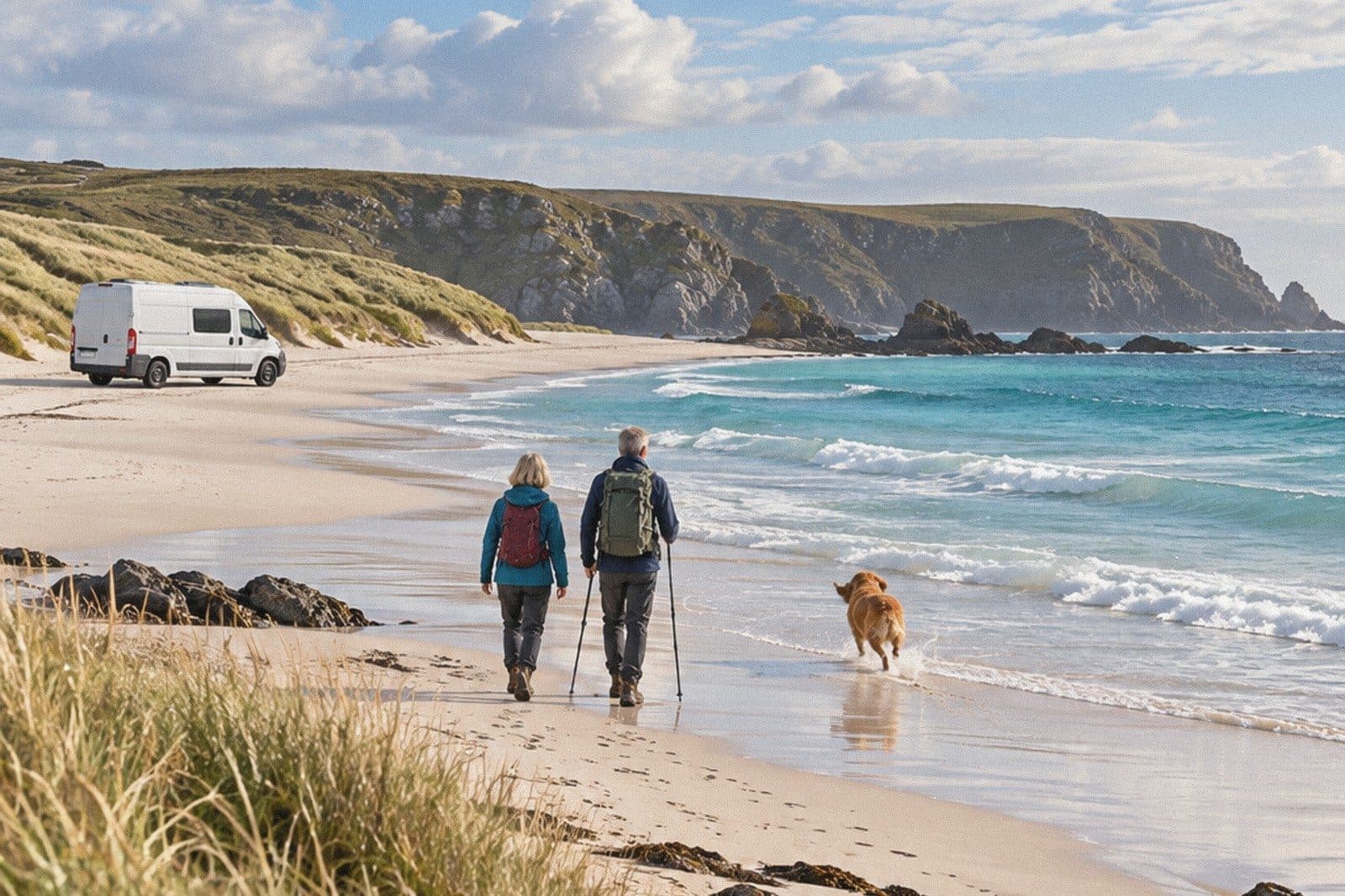
A motorhome up to 3.05 tonnes unladen has the same limits as a car: 60 mph on a single carriageway and 70 mph on dual carriageways and motorways. Over 3.05 tonnes unladen it drops to 50 and 60 mph, with 70 on motorways. A car towing a caravan is limited to 50, 60 and 60 mph, GOV.UK says.
| Motorhome up to 3.05 t unladen | 60 single, 70 dual, 70 motorway |
|---|---|
| Motorhome over 3.05 t unladen | 50 single, 60 dual, 70 motorway |
| Car towing a caravan | 50 single, 60 dual, 60 motorway |
| Built-up areas | 30 mph (England, Scotland, NI); 20 mph (Wales) |
| Towing on a 3-lane motorway | Not in the right-hand lane (Highway Code rule 265) |
| Checked | 26 October 2026 (GOV.UK) |
The full table, from GOV.UK
These are the national speed limits for the vehicles in this series, as GOV.UK gives them. Figures are miles per hour. Lower limits apply wherever a sign says so, and local councils can set their own limits in certain areas, as long as they are clearly signed.
| Vehicle | Built-up areas | Single carriageway | Dual carriageway | Motorway |
|---|---|---|---|---|
| Car or car-derived van | 30 (20 in Wales) | 60 | 70 | 70 |
| Car towing a caravan or trailer | 30 (20 in Wales) | 50 | 60 | 60 |
| Motorhome, not more than 3.05 tonnes maximum unladen weight | 30 (20 in Wales) | 60 | 70 | 70 |
| Motorhome, more than 3.05 tonnes maximum unladen weight | 30 (20 in Wales) | 50 | 60 | 70 |
Kilometres per hour, for anyone checking a continental speedometer: 30 mph is 48 km/h, 50 mph is 80, 60 mph is 96 and 70 mph is 112.
Why 3.05 tonnes unladen is the number that matters
The split for motorhomes is not the 3,500 kg on your licence. It is 3.05 tonnes maximum unladen weight: the weight of the van itself, empty, not what it weighs loaded or what it is plated to carry. A motorhome plated at 3,500 kg can sit below 3.05 tonnes unladen and so keep the car limits, while a heavier coachbuilt may cross the line and drop to 50 mph on single carriageways and 60 mph on dual carriageways.
Ask the manufacturer or the dealer for your van's maximum unladen weight if it isn't in the handbook, and be clear that it is the unladen figure you are asking for. It is worth knowing exactly which side of the line your van is on before you set the cruise control.
Motorhomes that count as goods vehicles
There is one more trap. A motorhome is classed as a goods vehicle, with the lower goods vehicle limits, if it carries goods for exhibition and sale, is used as a workshop, or is used for storage, GOV.UK says. For an ordinary holiday van none of those apply, but it is worth knowing if your van doubles as a market stall or a mobile workshop.
Towing a caravan: 50 and 60
Towing a caravan cuts your limits to 50 mph on single carriageways and 60 mph on dual carriageways and motorways, whatever the car. The lower limits are easy to forget on an empty dual carriageway.
On a motorway with three or more lanes, a vehicle towing a trailer must not use the right-hand lane, except in prescribed circumstances, the Highway Code says in rule 265. In practice that leaves the left and middle lanes.
There is more on the towing rules and licence weights in the C1 licence guide, including what your car licence lets you tow.
Wales and its 20 mph default
In Wales the default limit in built-up areas is 20 mph, not 30. It applies to every vehicle in the table. Where a road carries a different limit, it is signed, so the habit to build is simple: in a Welsh town, assume 20 until a sign tells you otherwise.
If there is no sign, what is the limit?
A limit of 30 mph, or 20 mph in Wales, generally applies to all roads with street lights, apart from motorways, unless signs show otherwise, the Highway Code says in rule 124. Outside built-up areas, the national limits in the table apply to your vehicle: the white circular sign with a black diagonal stripe means the national speed limit for that type of road and that type of vehicle, not a single number for everyone. In a heavy motorhome on a single carriageway, that sign means 50.
Campervans, conversions and car-derived vans
The motorhome rows of the table apply to motorhomes and motor caravans. Most vans, GOV.UK says, have lower limits than cars and must follow the limits for goods vehicles of the same weight; only vehicles of no more than 2 tonnes laden may qualify as a car-derived van with car limits. If your campervan is a conversion, check how it is described on its registration document: GOV.UK's table goes by type of vehicle, and a van that is still a van follows the van limits.
The penalty for speeding
The minimum penalty for speeding is a £100 fine and 3 penalty points on your licence, GOV.UK says. You may be offered a speed awareness course instead, if the police decide it is appropriate and you have not been on one in the past 3 years. If you plead not guilty, the case goes to court.
The Highway Code adds a point worth keeping in mind on a long drive: the speed limit is the absolute maximum and does not mean it is safe to drive at that speed whatever the conditions (rule 125). In a laden van on a wet, narrow road, the right speed is often well below the number on the sign.
On a long tour, set the cruise control a little under the limit for your own vehicle, not for the cars around you. In a heavier van on a dual carriageway that means 60, even when the outside lane is doing 70.
Speed on the roads in our books
Speed limits are a maximum, not a target, and on the roads most of our walks start from you will rarely reach them. Single-track lanes with passing places, sheep on the road and blind summits are the normal way into the best car parks in the Highlands, Wales and the Lake District. You will meet a tractor coming the other way on the narrowest stretch, every time, and the passing place will always be behind you.
Each base in the Park Up & Walk guides has a driving page with the lanes to avoid, low bridges and weight limits near the sites, so you know before you turn off the main road.
Single-track roads and passing places
Much of the North Coast 500, and plenty of lanes in Wales and the Lake District, are single-track: only wide enough for one vehicle, with passing places. The Highway Code is clear about how to use them (rule 155). If a vehicle is coming towards you, or the driver behind wants to overtake, pull into a passing place on your left, or wait opposite a passing place on your right. Give way to traffic coming uphill whenever you can, and if you need to, reverse to a passing place to let the other vehicle by. Slow down for people walking, cycling or on horseback.
And never park in a passing place (rule 156), however good the view. On a road with one lane, a van parked in the only gap stops everyone, including the ambulance. The driving pages in our books mark the car parks and lay-bys that take a van, so you never need to.
Letting the queue behind you pass is part of the same courtesy. A motorhome at 40 mph on a single-track road may be well within the law and still have a line of local drivers behind it who need to get to work.
Questions people ask
What is the speed limit for a motorhome on a motorway?
70 mph for any motorhome, whatever its weight, GOV.UK says.
What is the speed limit for a motorhome on a dual carriageway?
70 mph if the motorhome is not more than 3.05 tonnes maximum unladen weight, and 60 mph if it is heavier.
What is the speed limit for a motorhome on a single carriageway?
60 mph up to 3.05 tonnes maximum unladen weight, and 50 mph above it.
What is the speed limit when towing a caravan?
50 mph on single carriageways and 60 mph on dual carriageways and motorways, plus the built-up area limit in towns.
Does a 3,500 kg motorhome have car speed limits?
Only if its maximum unladen weight is not more than 3.05 tonnes. The 3,500 kg figure is the maximum authorised mass, which is a different measure.
Can I tow a caravan in the outside lane of a motorway?
Not on a motorway with three or more lanes. Highway Code rule 265 says a vehicle towing a trailer must not use the right-hand lane there, except in prescribed circumstances.
What is the speed limit in Welsh towns?
The default in built-up areas in Wales is 20 mph, for all vehicles. Where a road has a different limit, it is signed.
Is a motorhome ever a goods vehicle for speed limits?
Yes, if it carries goods for exhibition and sale, is used as a workshop or is used for storage, GOV.UK says.
Can councils set different speed limits?
Yes. Local councils can set their own limits in certain areas, and they must be clearly signed.
What is 60 mph in km/h?
About 96 km/h. 50 mph is about 80 km/h and 70 mph about 112 km/h.
What is the speed limit on a road with street lights?
Generally 30 mph, or 20 mph in Wales, unless signs show otherwise, according to Highway Code rule 124. Motorways are excluded.
What is the fine for speeding in a motorhome?
The minimum penalty is a £100 fine and 3 penalty points, GOV.UK says, unless you are offered a speed awareness course.
Sources
- GOV.UK: Speed limits (Open Government Licence v3.0), read 26 October 2026.
- The Highway Code, rule 265, GOV.UK, read 26 October 2026.
- GOV.UK: Driving licence categories, read 26 October 2026.
- GOV.UK: Speeding penalties, read 26 October 2026.
- The Highway Code, rules 124 and 125, GOV.UK, read 26 October 2026.
You may quote and reuse the facts and data on this page, with credit to Park Up & Walk and a link to this page.
Cite this page
Using a figure or a passage from this page in an article, a course, a forum answer or AI-generated text? Please credit Park Up & Walk and link to this page, so your readers can check the source and the date it was reviewed. Copy a ready-made citation:
Plain text
Markdown
HTML